
What Human Hair Wig Means
A human hair wig is named for the material used to make its hair fibres, not for a particular cap design or supplier. The fibres are arranged and secured to a wig base to create the style and coverage. Synthetic wigs use manufactured fibres, while blended wigs combine human and synthetic fibres. Knowing what the material label describes helps you separate a stated composition from claims about origin or grade.
Definition of a Human Hair Wig
A human hair wig is a wig whose hair fibres are made from human hair. The strands are arranged to form the visible hair and secured to a base, which holds the fibres in place and gives the wig its overall shape. The term identifies a fibre material; it does not specify how the strands are attached or what the base is made from.
Product wording can describe a wig as human hair without stating whether every fibre is human hair. Check the composition details if you need to distinguish an all-human-hair product from one that also contains synthetic fibres. A material description alone does not establish the hair’s country of origin, collection route, processing history or quality grade.
Human hair wigs can differ in texture, length, colour and finish, but those visible characteristics do not change the basic meaning of the material term. Nor does the term, by itself, identify a particular cap construction. Those details require separate product information rather than assumptions based on the words “human hair.”
Human, Synthetic and Blended Fibres
The main distinction is the fibre composition. Styling response and care requirements also vary by material and by the individual product, so the material name is a starting point rather than a complete specification.
| Fibre type | Composition | Styling considerations | Care considerations | What the term describes |
|---|---|---|---|---|
| Human hair | Hair fibres stated to be human hair; check whether the description specifies an all-human-hair composition. | Can generally be restyled with heat, though results depend on the hair and its processing. | Requires care appropriate to human-hair fibres and the particular wig’s instructions. | The stated fibre material, not origin, grade or cap design. |
| Synthetic | Manufactured fibres, which may include materials such as modacrylic, acrylic or polyester. | Often made to hold a set style; heat use depends on whether the specific fibre is designed to tolerate it. | Needs products and handling compatible with the synthetic fibre and the maker’s instructions. | A wig made with manufactured fibres rather than human hair. |
| Blend | More than one fibre type, such as human hair combined with synthetic fibre; proportions can vary. | Response depends on the fibre types and their proportions, so a blend may not behave uniformly. | Care needs depend on the materials present and the product’s instructions. | A mixed composition, not a single fibre category. |
A blend should not be treated as a synonym for either pure human hair or pure synthetic fibre. If a listing gives a blend but omits proportions or fibre names, those details remain unknown; do not infer them from appearance alone. For any material category, the product’s stated composition and instructions are more useful than a general label when assessing styling and care compatibility.
Origin and Quality Claims
The words “human hair” identify a material, but they do not verify where the hair originated or how it was collected. They also do not establish a quality grade, the condition of the cuticle, or the extent of processing. Two wigs carrying the same material description may therefore differ in those respects.
Treat specific details as product claims: a listing may name an origin, describe processing, or state a grade, but the material label alone does not confirm any of them. A conclusion about origin or quality requires evidence beyond the words “human hair,” such as clear product documentation that supports the particular claim. When those details are not stated, you can identify the fibre material but cannot reliably infer the missing information.
Fibre Descriptions and Labels
Product descriptions often combine several kinds of information in a single label, but those terms do not all describe the same thing. A material term identifies the stated fibre, while words such as Remy refer to a different aspect of how hair is described. Processing, stated origin and cap construction are separate details to verify in the product information. Reading each category independently helps you compare human hair wigs without treating one label as proof of every other feature.
Human Hair as a Material Label
When a product is labelled human hair, the stated fibre material is hair of human origin rather than a synthetic fibre. The label identifies what the seller says the hair is made from; it does not, by itself, describe the hair’s alignment, treatment history or the way the wig is assembled. Treat it as one material detail in the product description, not as a complete specification.
Material wording differs from terms about processing. A description may separately say that hair is coloured, bleached, steamed or otherwise treated; those words concern procedures or treatments, not the basic material category. Likewise, a claim about stated origin describes where the hair is said to come from, while cap terms describe construction. A human hair label does not confirm any of those separate details.
The label alone also does not establish a particular grade, a specific source country, whether the hair is Remy, or how consistently a finished wig will perform. It gives no measurement of density, strand diameter or the proportion of hair from any one source. Those details require their own clear statements, where available. When comparing listings, keep the material claim separate from the evidence offered for sourcing, processing and construction, rather than assuming one label covers them all.
Remy and Fibre Alignment
Remy is a commonly encountered description for human hair, and it is usually associated with keeping the hair cuticles aligned in the same direction from root end toward tip. Cuticles are the overlapping outer layers of each hair strand. In descriptions using the term, alignment refers to the orientation of those layers, rather than to the wig cap or to a particular styling method.
Cuticle-aligned human hair names a fibre arrangement, not a separate fibre species. The word Remy is often used to signal this alignment, but product descriptions can vary in how much detail they provide. Check whether the listing explains what it means by Remy and whether it states how the hair was collected or handled. The term alone does not tell you the collection method or document the hair’s path from source to finished wig.
Remy should not be read as a synonym for virgin. Virgin is a separate description associated with processing claims, whereas Remy refers to an alignment claim. Nor does Remy establish a source country, a grade or a measurable ranking of quality. It also does not guarantee a particular lifespan, texture, fullness or result when worn; those depend on details beyond the word itself.
For a more useful comparison, look for an explicit statement about cuticle direction alongside separate information about processing and origin. If two listings both say Remy but only one explains its terminology, that difference is relevant when assessing how specific the claims are. Keep the label’s stated meaning narrow: it concerns fibre alignment, not every characteristic of the wig.
Processing and Other Descriptions
Product information may place material, processing, origin and construction claims side by side. Read them as distinct categories, and check which details are stated rather than inferred from a term such as Remy or human hair.
- Fibre content: Check whether the listing identifies the hair as human, synthetic or blended, and whether it specifies the material for the full wig or only particular components.
- Processing: Look for direct wording about colouring, bleaching, perming, steaming or other treatments; these terms describe treatment claims, not the fibre’s origin or alignment.
- Stated origin: Note any country or region the seller names as the hair’s source, and keep that claim separate from the location where the wig was manufactured.
- Alignment description: Check whether Remy or cuticle alignment is explained, rather than assuming the term establishes processing history, source, grade or overall performance.
- Construction: Review separate details such as lace front, monofilament area or wefted cap, since these describe how the wig is built rather than its hair material.
When a listing leaves a category unspecified, treat it as unknown rather than filling the gap from another label. Comparing like with like means checking the same categories across products and keeping each claim tied to what it actually describes.
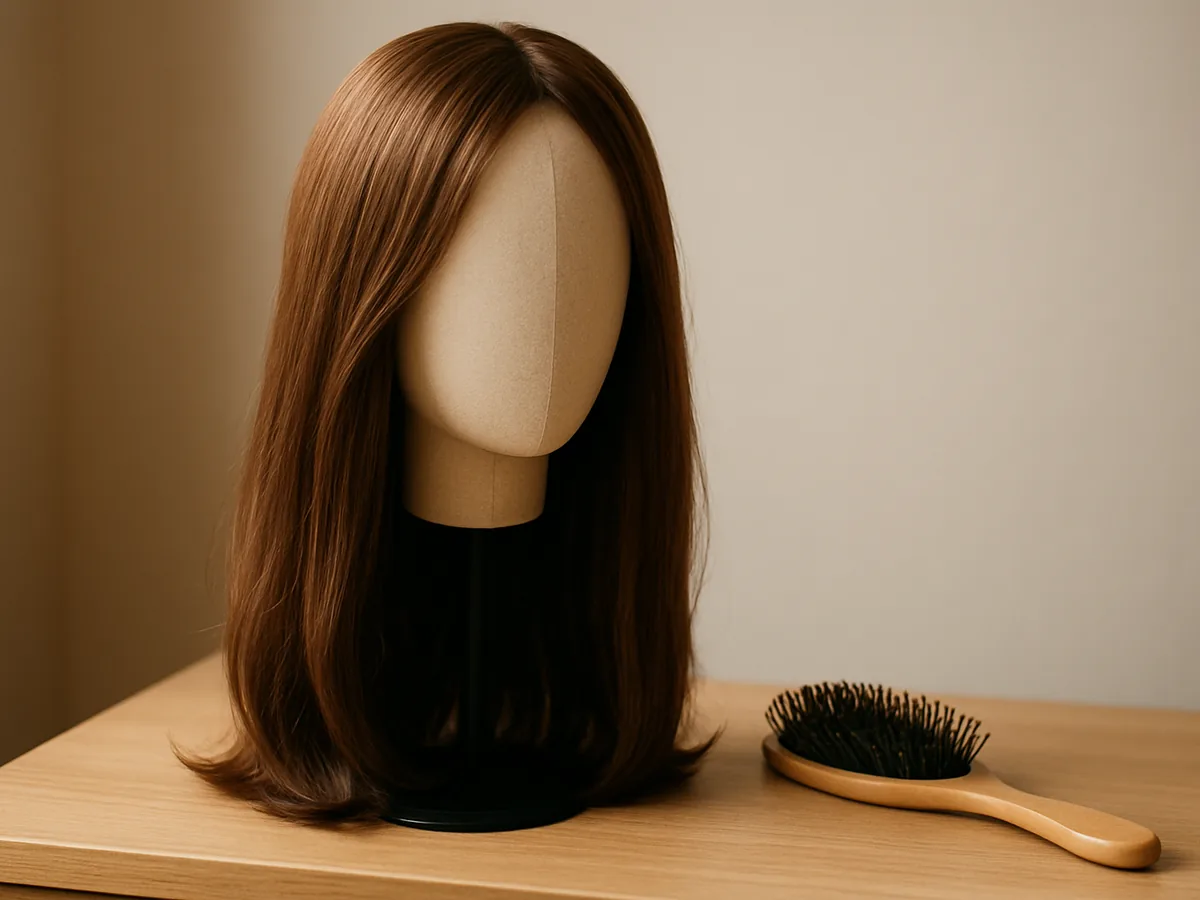
Styling and Routine Care
Styling and routine care influence how your wig looks from one wear to the next. Human hair fibres can be shaped in different ways, but the result depends on their condition, previous treatments and how they are attached to the cap. Washing, drying and storage also affect texture, tangling and shape retention. Check the wig’s care information before choosing a technique or product.
Styling Flexibility
Human hair wigs can generally be reshaped to suit different looks, from a smooth finish to curls or a changed part. Unlike many synthetic fibres, human hair does not rely on a factory-set style that must return after washing; its movement and texture respond more like natural hair. The outcome still depends on the fibre’s existing texture and condition, so a wig supplied with a wave may not behave exactly like naturally straight hair.
Blended fibres can combine human hair with synthetic strands, but the proportions and fibre characteristics vary. A blend may not respond uniformly to styling, and its synthetic component may have different care limits from the human hair. Check the product’s care details rather than assuming the whole wig can be treated as one fibre type. Existing colour or other processing can also affect how the hair responds to a change in shape.
Construction matters as well as fibre. Hair direction and attachment to the cap influence how a part lies and how much movement looks natural; brushing against the established direction can disrupt the intended finish. Lace front human hair wigs, for example, have a hairline area that needs careful handling when you style close to the front. For human hair wig styling, work in small sections and use a wig stand to keep the cap stable. If you want a major cut or a reshaped silhouette, a stylist experienced with wigs can account for how the hair falls when the cap is worn.
Heat, Colour and Chemical Processes
Heat styling human hair wigs can change the shape of the fibres, but repeated or excessive heat may leave hair dry, rough or less resilient. A heat protectant formulated for wigs or human hair may help limit exposure, but it does not remove the risk of damage. Follow the maker’s care information for compatible tools and techniques; there is no single heat setting that suits every wig, since fibre condition and prior processing differ.
Colouring is also affected by the hair’s starting shade, previous treatments and any finish applied during manufacture. A result that is predictable on untreated hair may look uneven on hair that has already been coloured or lightened. Chemical services such as bleaching, relaxing or perming can alter the fibre’s structure and may compromise its feel or strength. Do not assume that a wig can tolerate a process simply because it is made from human hair.
Before deciding on heat, colour or a chemical service, check for verified care information and consider the wig’s present condition. A qualified wig stylist can assess the fibre and test a discreet section before a larger change. When the history or treatment limits are unknown, keeping the existing finish avoids an irreversible result.
Washing, Drying and Storage
Washing a human hair wig is easier to manage when you work gently and keep the cap supported. The steps below help limit pulling on the fibres and preserve the style between wears.
- Before washing, detangle from the ends toward the roots with a wide-tooth comb, holding the hair above the section you brush to reduce tension.
- Wet the hair gradually with lukewarm water, following the maker’s directions and keeping the cap supported instead of twisting or bunching the fibres.
- Use a wig-friendly shampoo and smooth it through the hair in a downward direction; avoid rubbing lengths together, which can encourage tangling.
- Apply a suitable conditioner mainly to the lengths, then rinse carefully so residue does not weigh down the fibres or change their feel.
- Press excess water out with a towel rather than wringing the hair, then arrange the part and lengths while they are still damp.
- Let the wig air-dry on a stable wig stand when its care instructions allow; avoid brushing wet hair, which can stretch or pull fibres.
- Between wears, return the wig to a stand or its original support, away from crushing, direct sunlight and sources of excess heat.
How often you wash depends on wear, styling products and exposure to perspiration or environmental residue; a rigid weekly schedule is not necessary for every wearer. Clean the wig when it needs refreshing, and allow it to dry fully before storing it. During handling, hold the cap rather than pulling at individual hairs, particularly around the hairline and part, where repeated tension can loosen attachments. These habits help reduce tangling and preserve the chosen shape without relying on aggressive brushing or unnecessary washing.
Cap Construction and Fit
Cap construction describes the base that holds the hair, while cap fit concerns how that base sits on the head. Human hair wigs may use lace, monofilament, wefted sections, or a combination of these features. Each construction has a different placement and way of securing hair, which can affect the visible part, hairline, and movement. Measurements and the maker’s size chart help you compare fit independently of fibre choice.
Lace Fronts, Monofilament and Wefted Areas
Lace fronts, monofilament sections, and wefted areas describe cap construction, not the hair fibre. A cap may combine more than one feature, so check where each part sits rather than relying on a single label.
| Feature | Placement | Construction | Appearance or movement supported |
|---|---|---|---|
| Lace front | Along the front edge of the cap, at the hairline | Hair is attached to a fine lace panel; the exact lace size and attachment method vary by cap. | Can create a less defined-looking front edge and allow hair to be directed away from the face near the hairline. |
| Monofilament section | Commonly at the part, crown, or a larger area on top | Hair is individually attached through a sheer mesh section, with the covered area depending on the design. | Can show a scalp-like appearance at the covered part and allow direction changes within that section. |
| Wefted area | Often across the sides and back, in rows under the cap | Hair is sewn onto strips, or wefts, which are then secured to the cap base. | Hair tends to fall in the direction set by the rows; the weft structure remains beneath the hair. |
These features are not mutually exclusive: a cap can have a lace front, a monofilament crown, and wefted sides or back. Lace-front human hair wigs still differ in the width of the lace area and the construction behind it, so inspect the stated feature locations when comparing designs.
Head Measurement and Cap Fit
Cap sizing is based on head measurements, not on whether the wig uses human or synthetic hair. Use a soft measuring tape and follow the measurement points shown on the maker’s size chart; labels such as petite, average, and large are not consistent across all brands.
- Circumference: Measure around the hairline, above the ears, and across the fullest curve at the back of the head, keeping the tape level and comfortably snug.
- Front to nape: Measure from the center of the front hairline over the crown to the nape hairline, following the head’s curve rather than measuring in a straight line.
- Ear to ear over the top: Start at the hairline above one ear, pass the tape over the crown, and finish at the matching point above the other ear.
- Ear to ear across the forehead: If the chart requests this measurement, run the tape from the front hairline above one ear across the forehead to the corresponding point on the other side.
- Temple to temple around the back: Measure from one temple, around the back of the head, to the other temple when this dimension appears in the sizing chart.
- Nape width: Measure across the hairline at the nape only when requested; compare the result with the chart’s stated points, not an assumed standard.
Compare every requested measurement with the same maker’s chart and note any adjustment tabs or straps described for the cap. A close chart match can guide selection, but construction and individual head shape mean no size label guarantees the same fit for everyone.
Choosing Between Wig Options
Choosing between human hair wigs is a matter of matching the written specification to your styling habits, care routine, preferred cap features and measurements. A label alone cannot show whether a particular option suits your daily schedule or the way you want the wig to sit. Compare descriptions using the same criteria, such as fibre content, processing details, cap layout and stated size range. Clear specifications make it easier to weigh trade-offs without relying on a product name or broad quality claim.
Match the Wig to Your Priorities
If you regularly change your part, curl pattern or finish, look for a description that states how the hair can be styled and what limits apply. Styling flexibility is useful only when the required routine fits your time and skill; a style worn mostly as supplied may not justify choosing on flexibility alone. Compare the stated styling options with the look you expect to maintain between wears.
If you prefer a simpler routine, weigh the upkeep described for the fibre and style against how often you plan to wear the wig. A longer or highly textured style may call for more frequent attention to prevent tangling than a shorter, smoother one. Product details that specify suitable products and routine care give you a better basis for judging the ongoing commitment than a general claim of easy care.
Fibre descriptions can help narrow a choice, but check what each label means in the specific listing. If you are comparing Remy human hair wigs with other descriptions, look for an explanation of the term and supporting details rather than treating the label as a complete account of processing or performance. Choose based on the information supplied about the fibre and whether it meets your styling and maintenance priorities.
If cap construction affects your preferred hairline or parting, check which areas use lace, a monofilament section or wefted construction, rather than relying on a broad cap label. A feature that supports one styling preference may not be necessary if you normally wear the hair in a fixed position. Consider the placement and extent of each feature alongside the style you intend to wear.
For fit, compare the stated cap measurements with your own head measurements and look for any adjustment features described. If your measurements sit near the edge of a listed range, details about adjustment and fit are more useful than a general “average” size label. A secure fit depends on the actual measurements and the cap’s design, not on fibre description.
When several priorities compete, decide which one affects daily use most: styling choice, time available for care, visible cap features or fit. A specification that answers those practical questions is more useful than a broad claim that does not explain how the wig is made or maintained.
Product Description Checklist
Before comparing listings, check whether each description gives enough detail to assess the fibre, construction and fit. Use the following checklist to identify missing information as well as stated features.
- Confirm the fibre content and whether the hair is described as human, synthetic or blended; for a blend, check whether the description gives the proportion of each fibre.
- Look for an explanation of terms such as Remy or virgin, including what the listing says those labels mean for that particular hair.
- Check whether processing is described, including any stated colouring, texturising or other treatment, rather than assuming the fibre is unprocessed.
- Identify the cap features by location and extent, such as lace at the front, a monofilament parting area or wefted sections.
- Compare the stated cap size or measurement range with your own head measurements, and note any adjustment features specifically listed.
- Read the care guidance for recommended products, washing instructions, drying method and storage; check that it suits the routine you can maintain.
- Check whether styling guidance states any limits on heat tools, colour services or other treatments, rather than relying on a general styling claim.
Descriptions that provide these details make comparisons more meaningful; missing measurements or unclear label explanations leave important differences unresolved. Record the stated features side by side so that each option is assessed against the same priorities.
Cap Construction, Fit and Choosing Between Wig Options
Choosing among human hair wigs involves several criteria that answer different questions. Fibre descriptions relate to the hair material, while cap construction describes how the wig is assembled and fit depends on your head measurements. Styling flexibility and routine care add practical considerations that can affect how well an option suits your schedule. Compare these factors separately, then weigh them against the look and level of upkeep you want.
Compare the Main Decision Factors
Start by separating what the fibre description tells you from what the cap and fit tell you. A label such as Remy describes a fibre characteristic; it does not establish whether the wig has a lace front, how its interior is built, or whether its cap will fit your head. Likewise, a cap feature cannot verify a hair-origin or processing claim. Treat each detail as evidence about one specific part of the product rather than as proof of overall quality.
Next, consider styling and care as ongoing requirements. Human hair may offer options for changing the look, but those options come with maintenance demands that depend on the wig and the routine you are prepared to follow. A preference for versatile human hair wig styling may guide your fibre choice, for example, without indicating which cap construction will feel secure or look natural at your hairline. Conversely, a particular cap design does not determine how much styling flexibility the fibre provides.
Fit is its own practical test. Compare your measured head size with the maker’s size chart; a wig with appealing fibre and cap features may still shift or feel uncomfortable if its dimensions do not suit you. Think of the decision as three separate checks: the hair description for material, the cap design for construction, and the size information for fit. Your preferred appearance and care routine help rank the options, but one favourable detail should not stand in for the other checks.
Balance Construction, Care and Fit
Begin with the cap features that matter for your intended look, such as a natural-looking hairline or a parting area that suits how you plan to wear the wig. Then compare the listed cap size with your head measurements rather than assuming that a preferred construction will fit. If you cannot match the measurements to the maker’s chart, seek a specific sizing answer before choosing; attractive construction cannot correct a mismatch in dimensions.
Include care demands in the same comparison. A detailed style that needs frequent arranging may be a poor match for a limited maintenance routine, even when its cap and fit meet your preferences. Rank the features you will notice in regular wear, then check the product details for each one instead of letting a fibre label decide the whole choice. Choose by balancing the material you want, the construction you prefer, and a cap size that matches your measurements.